
How Does Ensembling Models Reduce Hallucination Risks?
Ensembling Models Reduce Hallucination Risks
Ensembling models is a powerful technique in artificial intelligence that combines multiple models to improve accuracy, reliability, and robustness. One of its most significant advantages is its ability to reduce hallucination risks, where AI generates incorrect, misleading, or entirely fabricated information. By leveraging the strengths of multiple models, ensembling helps mitigate errors and improve the consistency of AI-generated outputs, making it an essential strategy for minimizing hallucinations.
Al hallucination detection and accuracy improvement often arise from the inherent limitations of individual models. When a single model generates text, images, or predictions, it relies on its internal knowledge and training data. If that data is incomplete, biased, or noisy, the model may fill in gaps with incorrect or speculative information. Ensembling models counteract this by aggregating predictions from multiple sources, reducing the likelihood of a single model’s mistake influencing the final output. By combining different perspectives, ensembling ensures that hallucinated responses are less likely to appear.
One of the most common ensembling techniques is majority voting, where multiple models generate independent predictions, and the most frequent or agreed-upon response is chosen. This method helps filter out hallucinations because incorrect outputs from a single model are often outvoted by more accurate responses from others. In applications such as medical diagnosis or legal analysis, where precision is critical, majority voting ensembling can significantly enhance reliability by preventing erroneous conclusions.
How Does Ensembling Models Reduce Hallucination Risks?
Another effective ensembling approach is weighted averaging, where models contribute to the final decision based on their confidence levels or historical accuracy. This method ensures that more reliable models have a greater influence on the final output while still incorporating diverse insights from other models. If one model is prone to hallucinations due to data biases or overgeneralization, weighted averaging minimizes its impact by prioritizing more accurate sources. This is particularly useful in AI-powered search engines, recommendation systems, and financial forecasting, where precision is crucial.
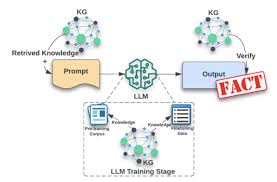
Diversity in ensembling models further reduces hallucination risks by integrating models trained on different datasets, architectures, or methodologies. For example, combining transformer-based language models with knowledge graph-based models can enhance factual accuracy. While neural networks excel at pattern recognition and language fluency, knowledge graphs provide structured, verifiable information. This hybrid ensembling method ensures that outputs are not only contextually coherent but also factually grounded, reducing the chances of hallucinations.
Another strategy used in ensembling is adversarial training, where multiple models are trained to challenge and refine each other’s outputs. This approach is particularly effective in generative AI applications, such as text generation and image synthesis, where hallucinations are more prevalent. By continuously refining predictions through adversarial feedback, ensembling ensures that AI-generated content remains accurate, relevant, and trustworthy.
The impact of ensembling on hallucination reduction is particularly evident in large-scale AI applications like conversational agents and autonomous systems. When chatbots or virtual assistants rely on a single model, they are more prone to fabricating information when faced with ambiguous or unfamiliar topics. However, by ensembling multiple models, AI systems can cross-validate responses, ensuring greater accuracy and reducing the risk of misinformation.
Overall, ensembling models is a highly effective strategy for mitigating AI hallucinations. By aggregating diverse predictions, leveraging majority consensus, weighting reliable sources, and integrating different architectures, ensembling enhances the accuracy and trustworthiness of AI-generated outputs. As AI continues to evolve, ensembling will remain a crucial tool in ensuring that AI systems provide reliable and fact-based information across various applications.