
How do you prevent warping of PCBs during assembly?
prevent warping of PCBs during assembly
In the realm of PC board assembly, preventing warping of PCBs stands as a critical endeavor to ensure the integrity, reliability, and functionality of electronic devices. Warping, characterized by bending or deformation of PCBs, can lead to misalignment of components, stress on solder joints, and compromised electrical connections, ultimately impacting the performance and longevity of electronic devices. In this article, we explore the essential techniques employed to prevent warping of PCBs during assembly and ensure high-quality soldering results.
One of the primary techniques for preventing warping of pc board assembly is selecting the appropriate PCB materials and thicknesses that offer dimensional stability and mechanical rigidity throughout the assembly process. High-quality laminates with low coefficients of thermal expansion (CTE), such as FR-4 epoxy resin, help minimize the risk of warping and deformation during temperature fluctuations encountered during soldering and assembly. Additionally, thicker PCBs provide greater structural integrity and resistance to warping, especially for larger PCBs or those with heavy components.
Furthermore, optimizing the design and layout of PCBs to minimize thermal gradients and mechanical stress during assembly is essential for preventing warping. By evenly distributing components and traces across the PCB surface, designers can minimize localized heating and cooling during soldering, reducing the risk of thermal distortion and warping. Additionally, avoiding large temperature differentials between components and the PCB, such as by preheating components before soldering, helps minimize thermal stress and warping during assembly.
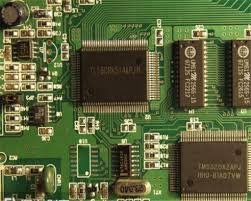
How do you prevent warping of PCBs during assembly?
Moreover, implementing proper soldering techniques and process parameters is essential for preventing warping of PCBs during assembly. By controlling the temperature, heating rate, and cooling rate during reflow soldering, manufacturers can minimize thermal shock and mechanical stress on the PCB, reducing the risk of warping and deformation. Additionally, using solder pastes with appropriate rheological properties and flux formulations helps ensure uniform solder wetting and adhesion, minimizing the risk of component misalignment and warping during reflow soldering.
In addition to process optimization, implementing proper handling and support techniques during assembly is essential for preventing warping of PCBs. Handling PCBs with care and avoiding excessive bending or flexing helps maintain their flatness and integrity throughout the assembly process. Additionally, providing adequate support and fixation for PCBs during soldering and cooling stages helps prevent sagging or deformation under the weight of components or thermal stress, minimizing the risk of warping and ensuring consistent soldering results.
Furthermore, implementing proper cooling and curing processes after assembly is essential for stabilizing PCBs and minimizing the risk of warping. By gradually cooling PCB assemblies to room temperature in a controlled manner, manufacturers can minimize thermal gradients and mechanical stress, reducing the risk of warping and deformation. Additionally, curing adhesives and conformal coatings at the appropriate temperature and humidity levels ensures proper bonding and adhesion without inducing warping or distortion in PCB assemblies.
Moreover, implementing proper storage and transportation practices for PCBs before and after assembly is essential for preventing warping and maintaining their dimensional stability. Storing PCBs in flat, dry, and stable environments with controlled temperature and humidity levels helps prevent moisture absorption and mechanical stress that can lead to warping. Additionally, handling and transporting PCB assemblies with care and using appropriate packaging materials help minimize the risk of physical damage and deformation during transit.