
How Do Electronic PCB Boards Support Automation in Manufacturing?
Electronic PCB Boards Support Automation in Manufacturing
Electronic PCB boards are used for a wide range of applications, and the demand is constantly rising. To meet this demand, manufacturers are turning to automation for a number of reasons. These include increased efficiency, cost reductions, and improved quality control. Automation increases productivity, reduces human error, and improves accuracy in the manufacturing process. These benefits are important, especially when the production rates are high. However, automation isn’t a one-size-fits-all solution for PCB manufacturing. It requires specific knowledge of how it works, and it must be carefully planned to optimize its benefits.
Automating a PCB assembly process can help you save time and money. There are many ways to do this, including using automated CAD tools, robots, and advanced hardware devices and machines. Some of these can even replace the human operator. This allows employees to focus on other tasks that require higher levels of expertise, such as circuit design and QA/QC.
The PCB manufacturing process begins with the design of a electronic pcb board, usually done on a computer using electronic design automation (EDA) software such as KiCad or Eagle. After completing the design, the data is uploaded to a PCB fabricator (often called a fab) that will create your board. They’ll use a set of standard instructions—called Gerber files in the RS-274X or RS-274X2 format, along with drill files—to make your board.
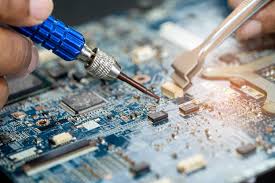
How Do Electronic PCB Boards Support Automation in Manufacturing?
After the PCB is made, it goes through a soldering process. The components are installed on the board by a pick and place machine, which uses a camera to identify the coordinates of the PCB’s solder pads and determine what component to put where. A variety of different types of components can be placed this way, from large chips to small LEDs. The machine will also apply a thin layer of solder paste to the surface of the board.
Once the components are installed, they’re heated again to melt the solder and bond them to the board. Once the solder is cooled, it’s ready for testing and inspection. The test and inspection steps can be automated with a wide variety of methods, from AOI to X-ray inspection.
A key benefit of automation is its ability to detect errors that are difficult or impossible for humans to spot. This allows for faster, more accurate assembly and eliminates waste. It also reduces the risk of errors caused by manual assembly, which can be expensive and time-consuming.
Automation can also help increase efficiency, allowing you to produce more boards in less time. It’s possible to build up to ten times more boards per hour with an automated assembly line than with a manually assembled board. This also makes it easier to meet deadlines for new products and services. Additionally, automation can help prevent environmental hazards such as electrostatic discharge. Finally, it can help you reduce waste with efficient material handling and minimized waste disposal. It can also protect workers from the dangers of handling chemicals and extreme temperatures that are common in solder reflow stations.